- Partnerships
- September 15, 2026
Evan HoweInterview with Peter Mbature of Kamavindi Coffee Lab
As we celebrate the launch of the Thamani Foundational Partnership, I’m excited to share this conversation with my friend Peter Mbature.
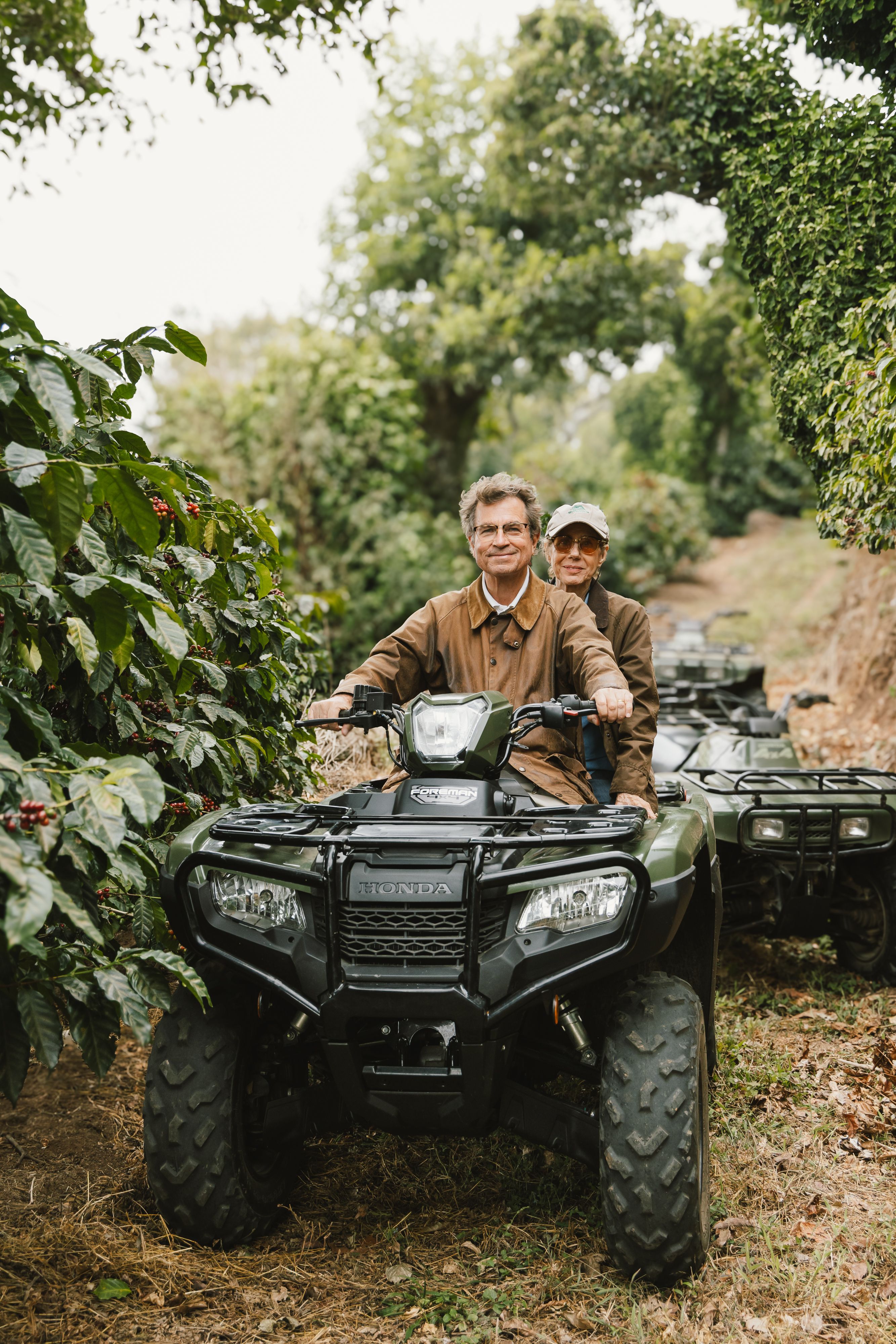
Peter and his family produce outstanding coffee at Kamavindi Estate, a farm that their family has owned and operated for three generations. And with the more recent addition of Kamavindi Coffee Lab, the Mbature family has added sourcing, QC, and export operations to their enterprise. While Passenger’s team has never lacked enthusiasm for beautiful Kenyan coffees, we didn’t seriously consider the idea of a Foundational partnership in Kenya until we met Peter. The opportunity to build something with the Mbature family, working directly with them as our trusted partners in the Mt. Kenya region was far too special to miss. Thamani would not exist without them, and there is so much to be explored in the coming years.
This conversation was recorded in Embu, Kenya on February 5, 2026. It has been edited and condensed for publication.
Evan Howe: Thanks so much for your willingness to sit down for this conversation Peter. What can you tell me about the history of Kamavindi Estate?
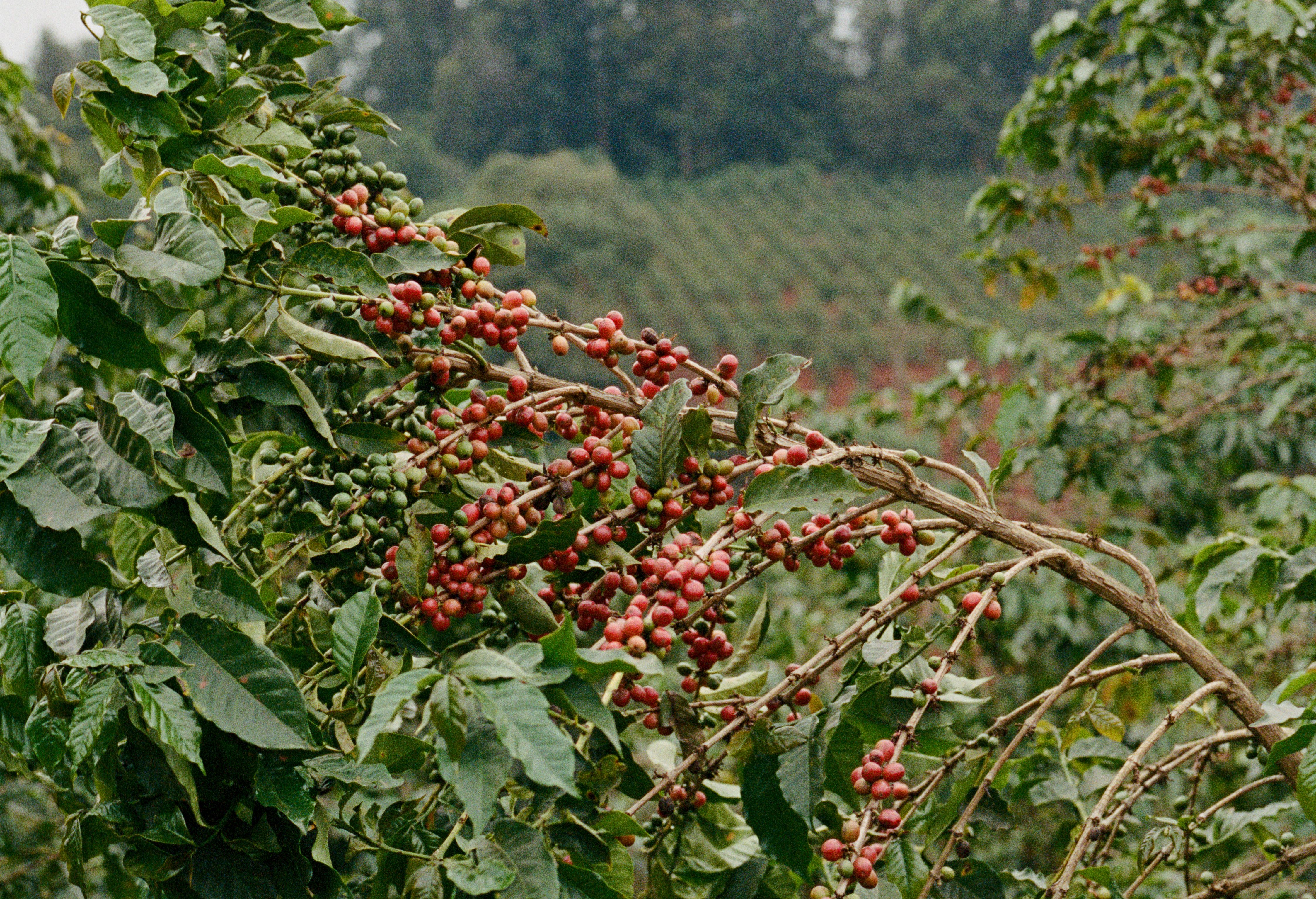
Peter Mbature: Kamavindi is a family-run farm located in Embu, Kenya at an elevation of approximately 1650 meters above sea level. The farm was established by my late grandfather, John Njiru Mbature with an initial planting of 100 coffee trees. At that time, before Kenyan independence, every Kenyan farm was limited to planting no more than 100 coffee trees. So our first trees were planted in 1958, but after Kenyan independence, locals were allowed to plant more ambitiously. By 1970, my grandfather had successfully added many more trees to the original 100. After his passing the farm moved to our parents, and things were expanded further under their management. Currently Kamavindi Estate is managed by me and my siblings. After the expansions of all three generations, the farm currently has approximately 10,000 coffee trees under cultivation. Our focus has always been the traditional Kenyan SL varieties (SL28 and SL43). Of the 10,000 trees currently planted on the farm, 7,500 are SL’s, with the remaining 2,500 trees being Ruiru 11.
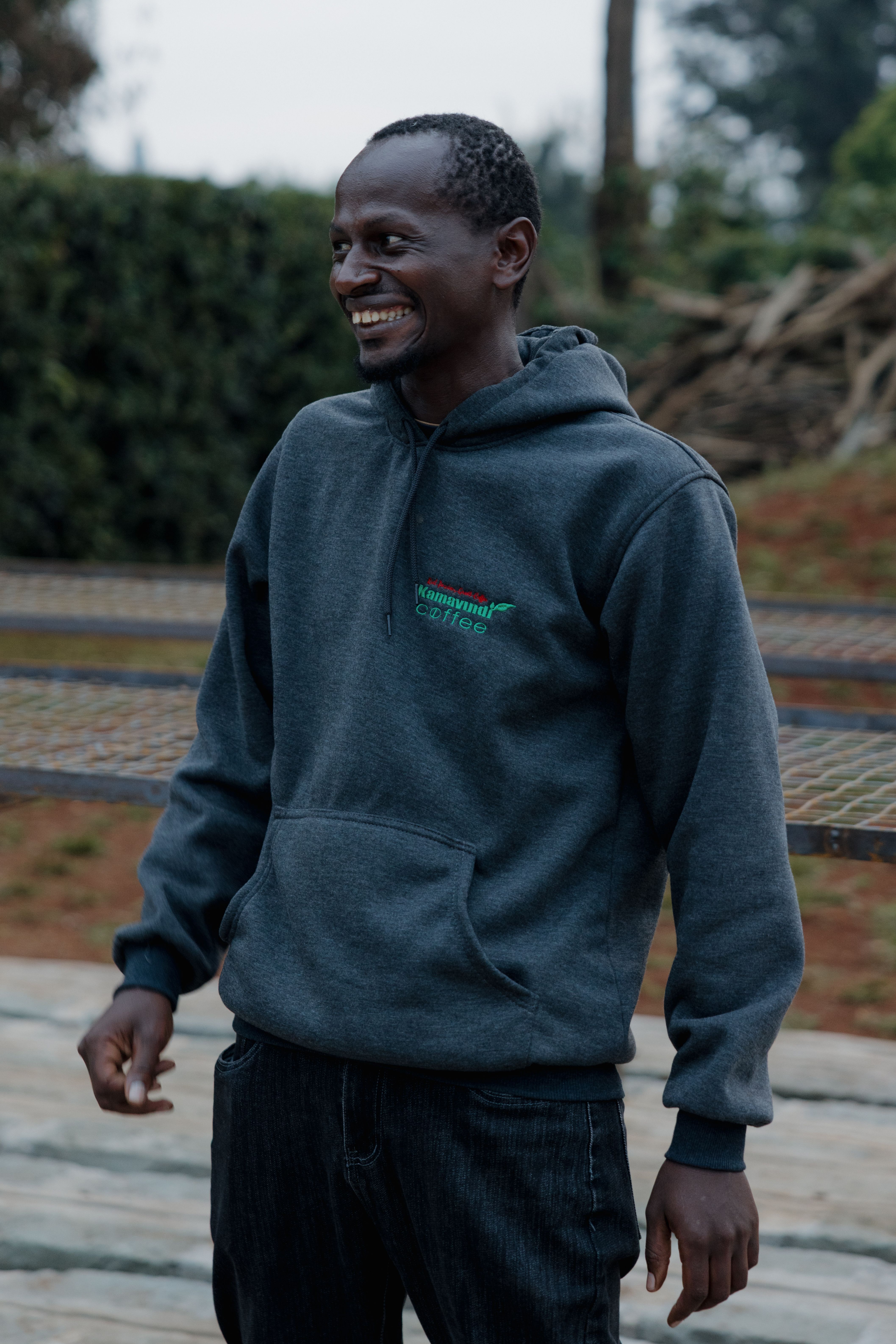
Peter Mbature
E: What are some of your earliest memories on the farm?
P: I’ve loved farming from the very beginning. When I was a kid, I had a little plot where I was allowed to plant corn. It was just a small area, maybe 10 square meters. I would plant my corn there behind the chicken house, and I also had my own chicken that would be in the same area! I was probably about 10 years old at the time. I specifically remember that plot because I didn’t plant my corn properly, the seeds were spaced too close together, and so the plants crowded and squashed each other. I also remember that my chicken had some chicks, and when I tried to feed them, the chicken was feeling very protective, and I was bitten by my chicken! With respect to coffee, I have early memories of my parents taking coffee from our farm to sell to the local cooperative society. Sometimes they would not come back till the next morning, and sometimes they still had not sold the coffee. There was so much production in our area during those years, that farmers would sometimes spend all night in the washing station, waiting in long lines for their coffee to be received.
E: Did you work in the coffee industry prior to taking over the management of the farm with your siblings?
I didn’t work in coffee prior to getting involved in the family business. After college I worked for a branding agency in Nairobi, and actually started my own branding company shortly thereafter. My company was successful, however, I decided to shut it down in 2012 so that I could be free to assist my parents with the farm. During the years that I was working in the branding industry in Nairobi, I would often drive out to Embu to spend weekends with my family, and I loved being at the farm so much that I would find myself struggling to go back to my job in the city. I felt more at home at the farm. I felt more at home with the coffee! This was a time when coffee prices were quite low in Kenya and coffee production really wasn’t profitable. So the need to make money would push me back to my job in Nairobi even as my heart preferred to be at the farm.
A little later, after this time, I lost my lost brother in a tragic carjacking incident in Nairobi. Up to that point, my brother had been more involved helping my parents with the farm. So in that moment, I felt that it was my responsibility to step up as the remaining son, to help my parents manage the farm operations.
E: Did you feel a passion for coffee before you chose to get involved with the family business, or did that come later?
Even today I would say that it isn’t specifically coffee that I love. I have always loved growing anything. I love being a farmer. I love the cows. I love growing corn, tomatoes, anything! The thing about coffee is that it has always had higher economic potential compared to the other crops. When we received our first offer from a coffee buyer for a direct sale of our coffee, I also had some tomatoes on the farm, and I remember thinking that the kind of money we were starting to make from coffee was far beyond anything I could make from tomatoes, or any other crop that would grow at Kamavindi. So, I produce coffee first because I like growing anything, but second and most importantly because coffee is what makes financial sense.
E: Can you tell me about how regulations have changed in Kenya, such that it is now possible for entities like Kamavindi to sell and export coffee directly?
In Kenya you need a license for everything. To plant coffee you need a license. To process coffee you need a license. To transport coffee parchment to a dry mill you need a license. To operate a dry mill you need a license. To warehouse coffee you actually need two licenses! And of course to export coffee also requires a separate license. This type of setup has traditionally kept the farmer locked out because access to these licenses was very controlled and very expensive.
It was only recently, when Kenya changed some of the regulations, that access to these licenses became much more accessible to individual farmers. In 2019 the government introduced legislation that established a new license called the grower-miller license. Any private farmer or cooperative society could apply for this license, and this made it possible for any cooperative society or private estate in Kenya to begin exporting coffee directly to buyers. The regulation changes also made it easier for entities like Kamavindi to obtain the license to legally serve as an agent and market other coffees (i.e. not just Kamavindi coffees) directly to buyers. So this makes it possible for us to not only sell coffees from our farm directly to companies like Passenger. It means that we can sell and export coffees from other private estates and even cooperative societies to you as well.
The government decision to make these marketing licenses more accessible represented a big change for the Kenyan coffee industry. Previously, the application for a marketing license required a deposit of one million U.S. dollars! So you can understand why it was a very small number of companies that actually held these licenses at that time. Before the regulation changes, there were probably only about 8 entities that held these licenses in the entire country. So this has been a profound change.
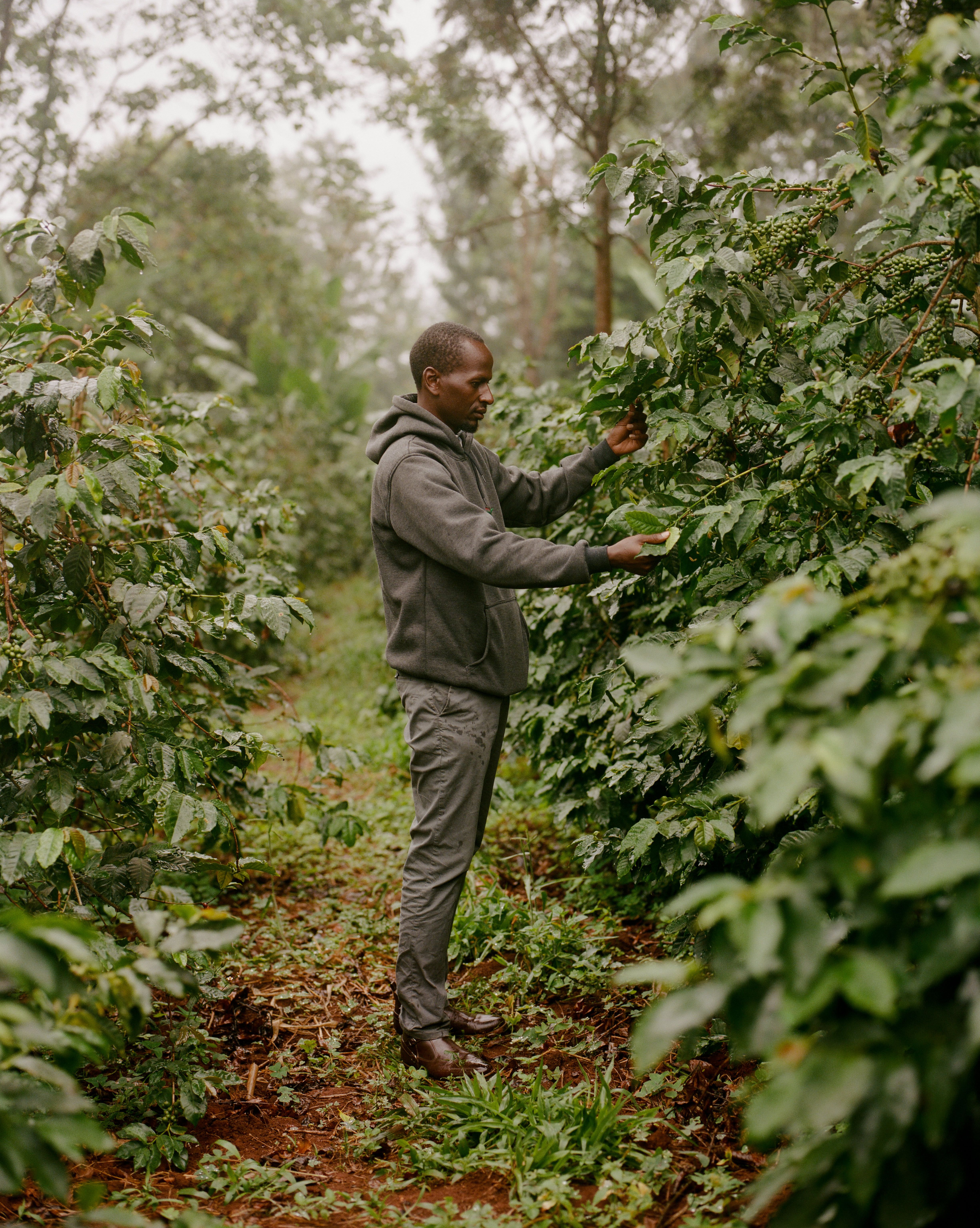
Peter Mbature
E: When did you and your family decide to launch Kamavindi Coffee Lab, and what was the vision for the project?
When we started selling to the specialty market in the United States, I learned a lot about what actually determines a coffee’s quality and value. Prior to those early experiences, I had no idea that cup score could have a huge impact on price. I thought we had the best coffee in Kenya based on how healthy our trees looked, but I now know that, at the time, a lot of our coffee was phenolic. The more I learned about cupping and coffee quality, the more I felt that it was important to create a space for more Kenyan farmers to learn about quality in the way that I was lucky to. Initially, the vision for our lab was to set up a training center where other farmers could come and learn about coffee processing, and taste their own coffees, which we were already doing. This was prior to the regulation changes in 2019 that enabled Kamavindi Coffee Lab to become an export partner for other producers.
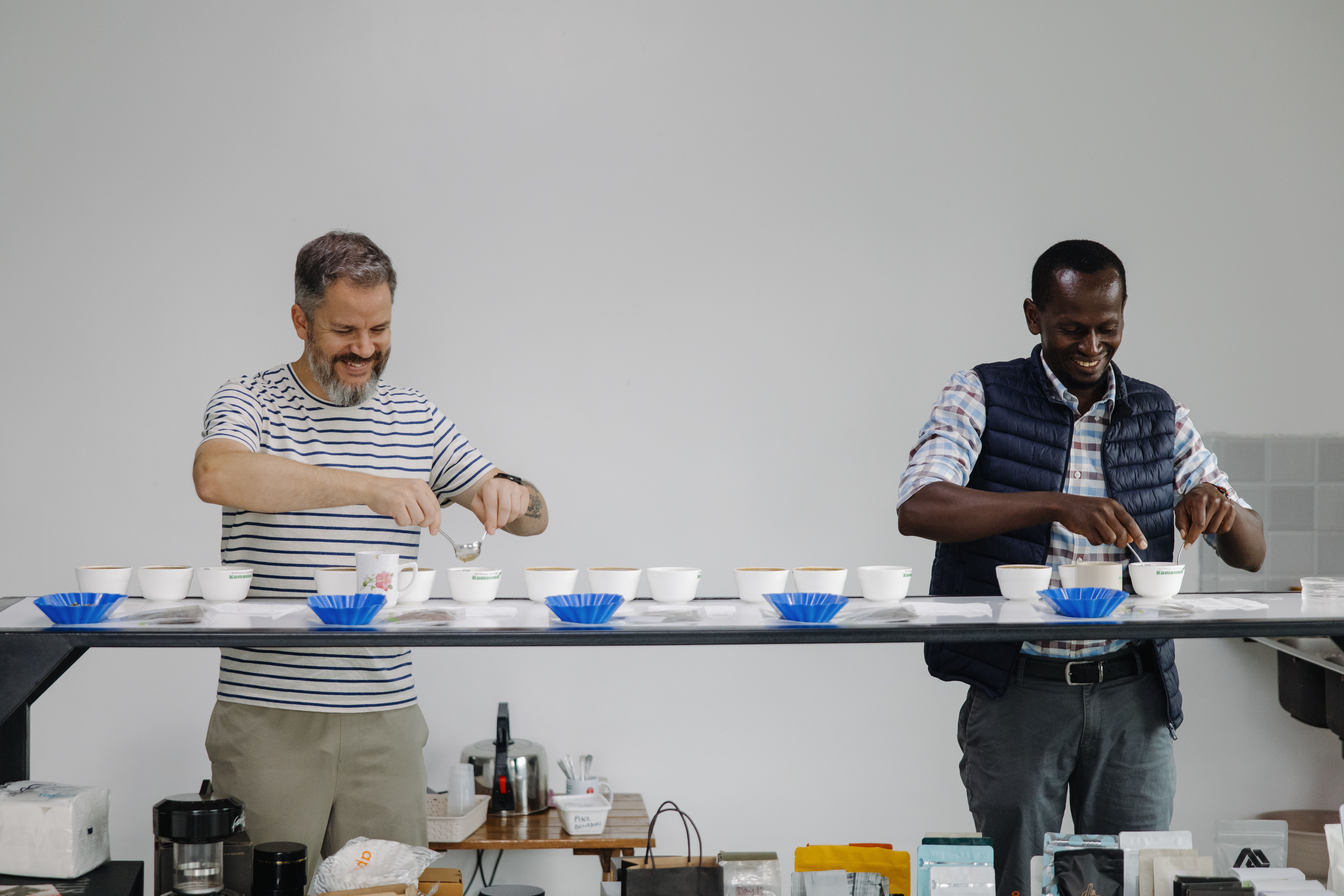
Evan, Director of Sourcing and Producer Partnerships, with Peter.
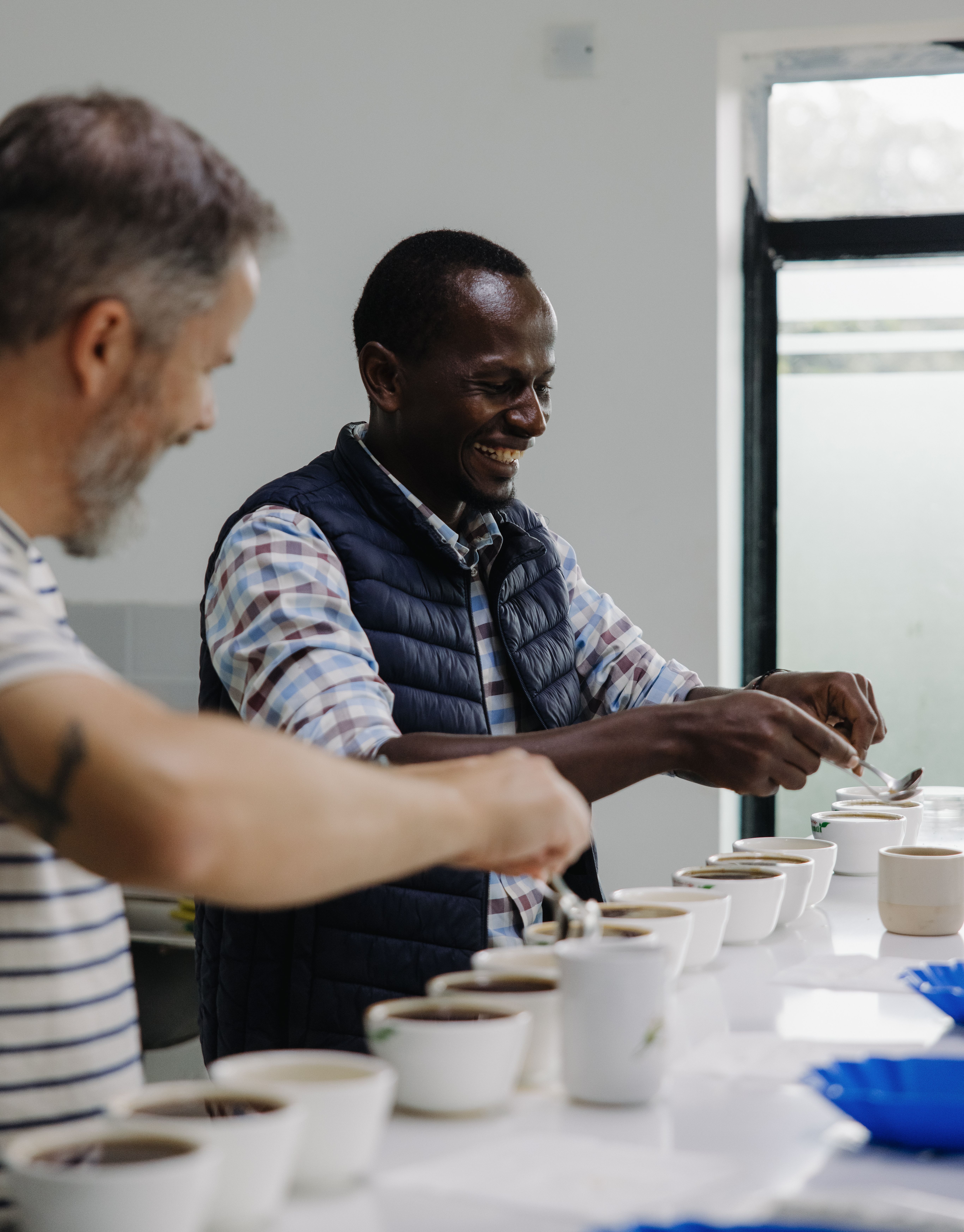
So, while our family operation now includes export services, the original vision was 100% about community education. We wanted Kamavindi Coffee Lab to be a place where other farmers could learn about cup quality, where they could benefit from more transparency about the quality and value of their coffee that has largely not existed in the history of Kenyan coffee. Today it is still somewhat revolutionary that farmers and buyers can spend time cupping coffees together in our lab and have direct contract conversations without any gatekeepers.
E: In recent years, many buyers have expressed the opinion that the quality of Kenyan specialty coffee has not been as high, or as consistent, as in the past. Do you think this view is accurate, and if so, what do you think were the contributing factors to lower or more inconsistent coffee quality in Kenya?
Honestly, as someone who has been tasting coffees from most farms across the Mt. Kenya region for many years, I would say yes, the quality has been coming down and volumes have been coming down consistently. So why is this? Whenever I’m experiencing a challenge as a farmer, I look to my neighbors to see whether they have similar challenges. If they do not, then I definitely need to see what is wrong on my farm! So let’s look at two of Kenya’s neighbors, Uganda and Tanzania. Back in the late 1980’s Kenya was producing a higher volume of coffee than those countries, but today Uganda is producing close to nine times the volume that Kenya is producing and Tanzania probably at least three times the volume. And quality from both countries has been relatively consistent in recent years. So this comparison tells me that something is wrong in Kenya.
There has been a combination of contributing factors in my opinion. We are struggling with climate change, an aging farmer population, higher cost of living, widespread land subdivision. But perhaps an even more significant factor: at certain points in the history of the Kenyan coffee industry, we had a national government in place that took advantage of coffee farmers. This was true in the 80’s and 90’s, and even though this government was no longer in power by 2000, we are still trying to dig ourselves out from the damages more than 25 years down the line.
Other players in the industry have taken advantage of farmers as well. We have had major issues with price transparency. Kenyan coffees have often been the most expensive coffees on the market, but the price received by the Kenyan farmer has often not reflected that. This type of supply chain, where buyers have to pay high prices and producers do not feel motivated to invest in their farms because actors in the middle are keeping too much for themselves, is not a recipe for coffee quality over time. I think the most important reason that coffee quality has been going down in recent years is that, for decades, Kenyan coffee farmers have not seen a consistent financial incentive to invest in their farms.
With the Retro 1984 project, and other initiatives including our forthcoming Thamani partnership with Passenger, we are striving to re-establish that incentive for the farmer, to light the spark again, by clearly communicating quality feedback and offering them better prices more directly and transparently when the quality is there.
It requires challenging conversations with farmers when we have to communicate that the quality of their coffees is not as good as they think. But if there is clear financial motivation to reinvest at the farm level, I think we will see a significant boost to quality in the coming years.
E: Passenger is incredibly proud to launch our newest Foundational Partnership in collaboration with you, with your family, and with a few of the Kenyan producers that you have connected us with. What does this kind of partnership mean to you?
I always tell coffee farmers that, in order for them to build sustainable businesses, they have to establish themselves as suppliers for the specialty coffee industry. The vast majority of these producers, the vast majority of these farms, are simply not set up for high-volume, commodity coffee production. So, as private Kenyan coffee producers, we need access to the top specialty market. And as a specialty roaster and buyer, Passenger needs to maintain long-term relationships with clients and customers that see the value of top specialty coffee and are willing to invest accordingly. So, my view and understanding of this partnership is that it aspires to provide ongoing financial motivation for selected Kenyan producers to continue producing Kenyan coffees that Passenger wants to bring to market. Partnership implies transparent mutual understanding between a buyer and a farmer. It is built through direct conversations over time, where both parties gradually gain an understanding of each other’s business challenges, looking for opportunities to achieve mutual success. Maybe another way I would describe partnership would be business based on friendship.
E: We are planning to call this new partnership “Thamani”. What does this word mean to you?
Passenger's partnership with the Mbature Family is an investment in their Kamavindi Coffee Lab project, bringing beautiful coffees of the Mt. Kenya region to our year-round menu.
Thamani is a Swahili word that means “value”. I suggested this word as the name for our partnership, because for this partnership to succeed, we need to create value on both sides of the chain. Passenger and Kamavindi Coffee Lab have the opportunity to create value for the farmers, first and foremost, by offering competitive prices. The farmers and Kamavindi Coffee Lab have the opportunity to create value for Passenger, and for your customers, by producing specialty coffees of outstanding and consistent quality. So, the Thamani partnership exists to create value for the farmer in the form of ongoing, competitive prices, while consistently producing coffees that are of value for Passenger year after year. For me, a partnership of shared value is how sustainable relationships are built.
E: Kamavindi, both as a coffee farm and as an export operation, is very much a family enterprise. Can you tell me a little about how you and other members of your family collaborate in the family business?
At Kamavindi Estate, my role is focused at farm level: monitoring production, disease control, pest control, soil health, etc. My wife Gladys manages the workers, ensuring they are paid on time, and checking to see that the person who is cooking for them is preparing good food for their meals. She is also the person that translates farm needs to an actual work schedule. I may report that we have weed control needs, or inputs that need to be applied to the trees, but she will actually manage the workers and make it happen. She is the master of daily operations.
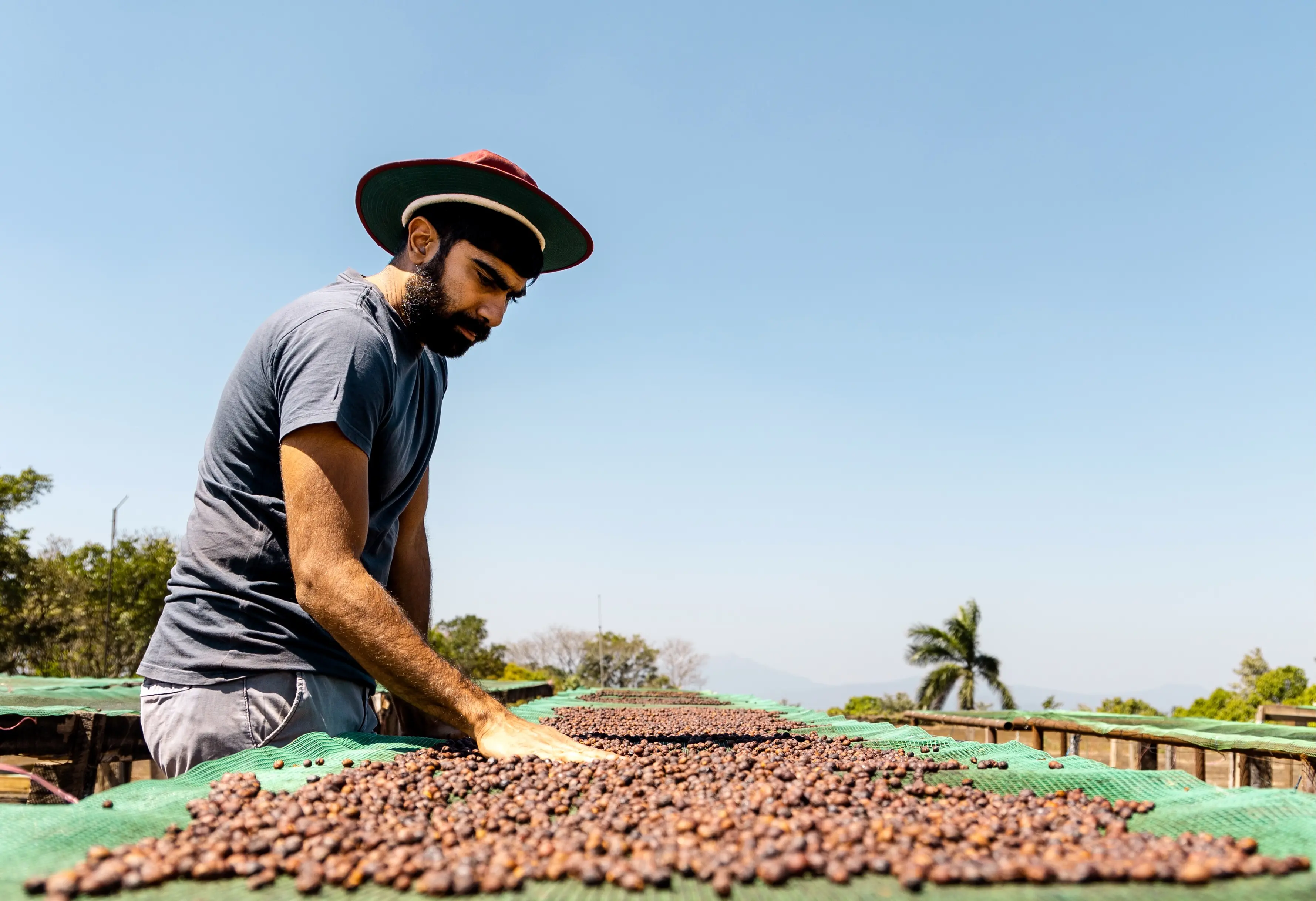
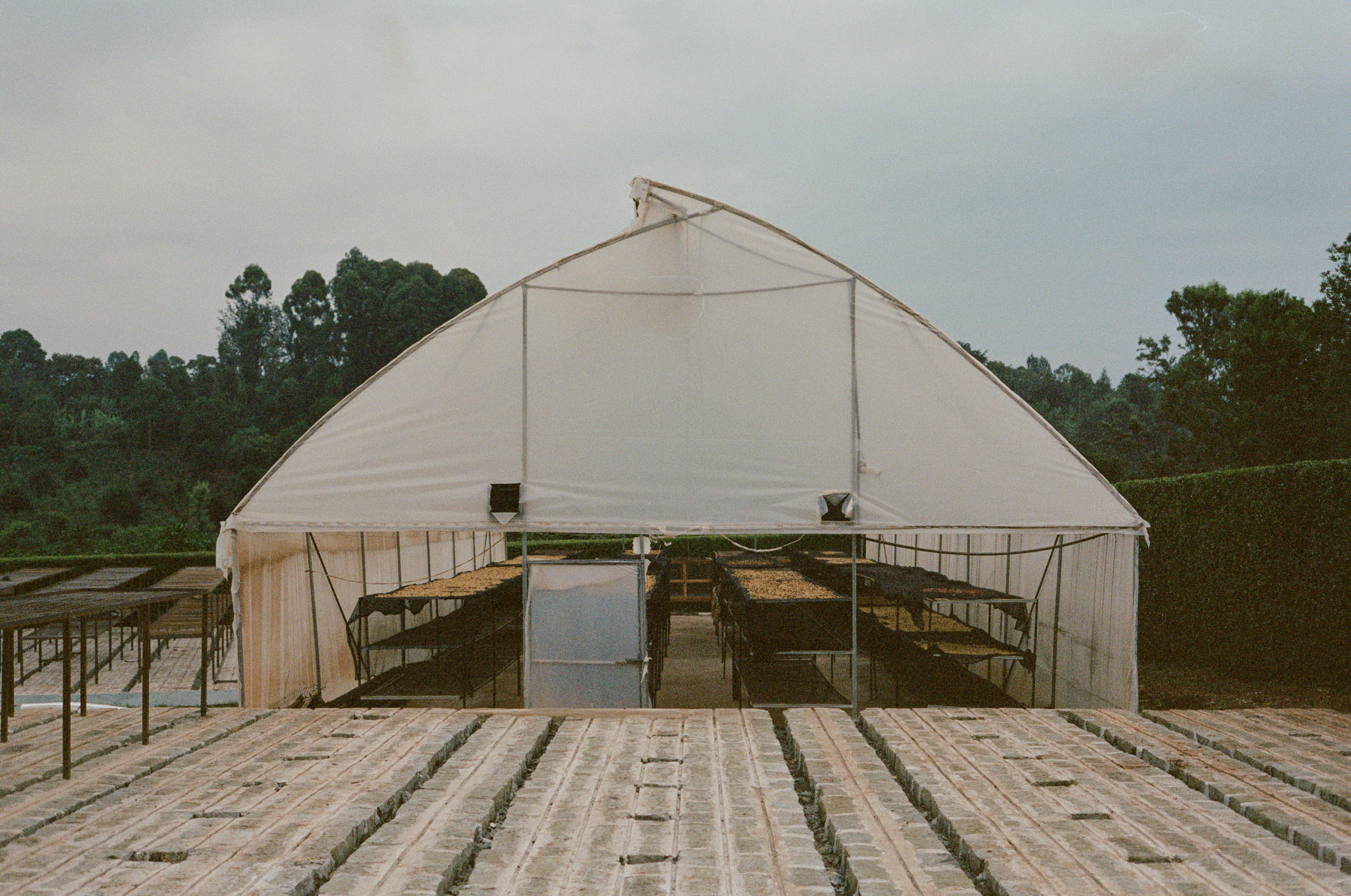
My sisters Gladwell, Anne, Mercy, and Liz are also a huge part of our business. During the harvest, everyone comes home to Kamavindi. Part of their contribution is to supervise the pickers who are harvesting the coffee cherries, and they also play a big part in managing the drying. Once we harvest, pulp, complete the fermentation, and wash the coffees, my sisters take over and ensure that the parchment is dried perfectly according to our protocols.
My brother-in-law Ringa is also a big part of the family business. During the harvest, Ringa is heavily involved with the pulping and fermentation of the coffees, and he also participates in farm visits to maintain communication with other producers that we are in partnership with. After the harvest, Ringa is centrally involved with all of the logistical details that have to be managed so that we can successfully export coffees from Kamavindi Coffee Lab to our partners around the world.
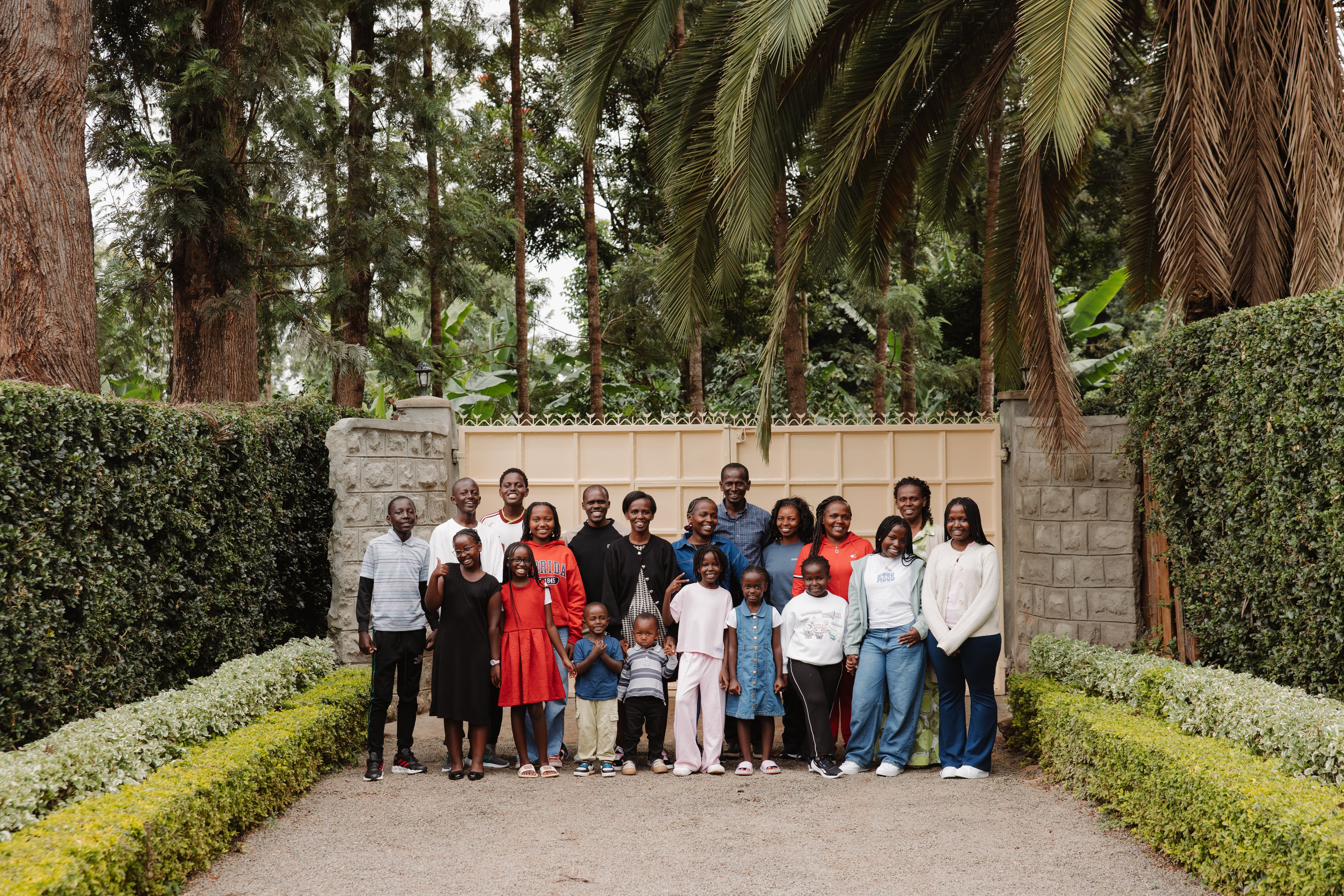
The Mbature Family
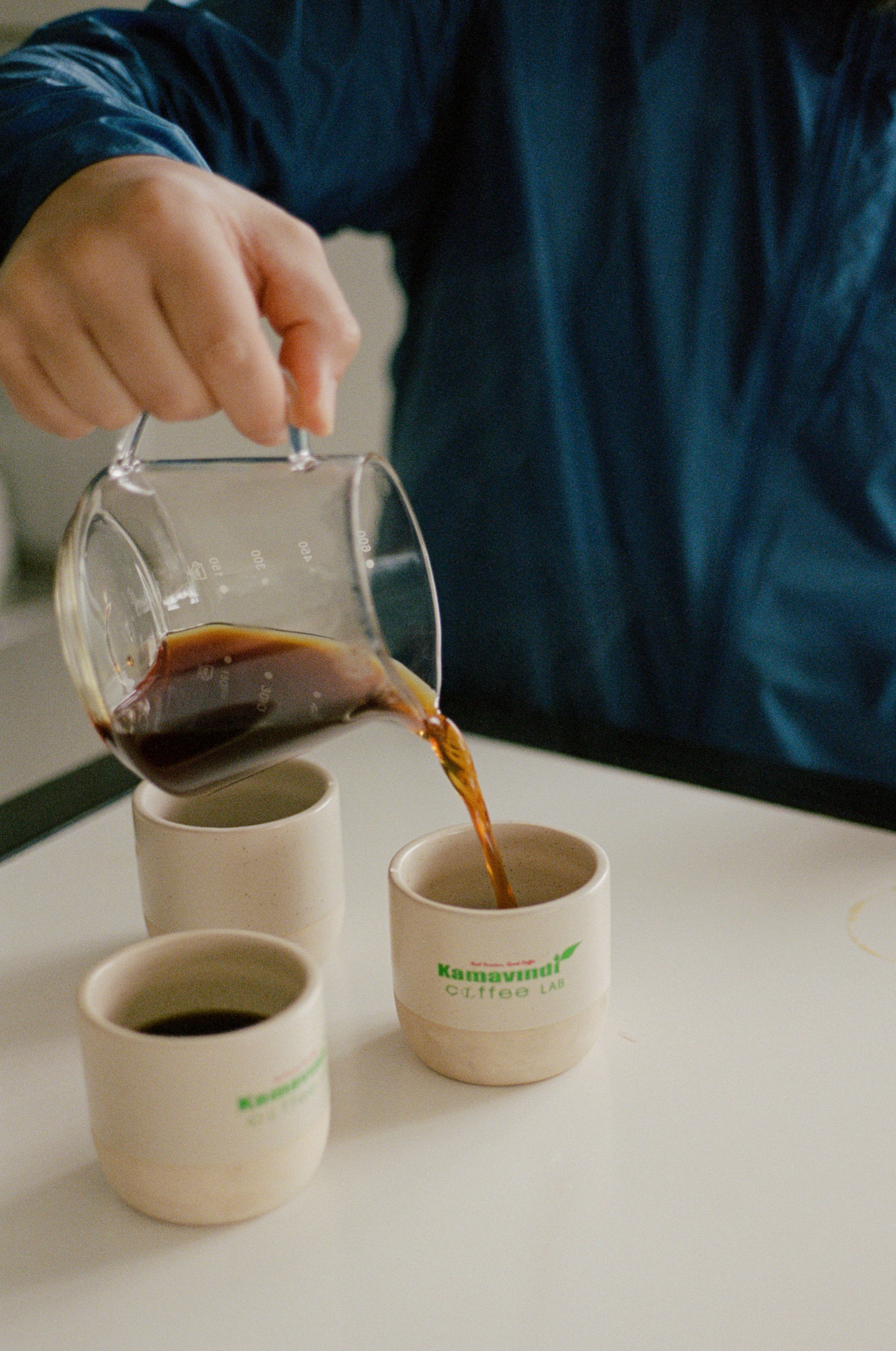
Every member of our family has been completing training on the cupping and quality evaluation side, so we all cup all of the coffees as a family here in the Kamavindi lab. Everyone is involved and has a voice in the QC process. We cup the coffees together and talk about the quality before making the final decision regarding which coffees to present to buyers.
E: What have been Kenyan farmers’ biggest obstacles to top quality coffee production in recent years?
The biggest obstacle to top quality coffee production in recent years has been the lack of adequate financing. The new regulations in the Kenyan coffee industry have introduced a lot of changes. Some of them have been good, some of them have been detrimental to the industry as a whole. One big negative that was introduced with the new regulations relates to financing. Previously, farmers would receive pre-financing assistance from marketing agents but now it is very difficult for a farmer to access pre-financing because marketers are no longer allowed to advance money to coffee farmers. So that is now a major challenge for farmers. Coffee is a daily job year-round, but currently most farmers receive the entirety of their monthly salary in one payment, once a year! You have to be incredibly disciplined with that money so that you have a sufficient budget in place to pay your bills and have enough of a reserve set aside for unexpected needs. The challenge of this payment system, and the lack of pre-finance opportunities has resulted in many farmers struggling to stretch their annual payment adequately to cover monthly bills, investments in farm nutrition, medical fees, school fees, the list goes on. It’s no surprise that some of the investments that are needed for top quality coffee production are not consistently made. I mean, think about it: How well would you do if you were only paid once a year?
The government has introduced a funding source called the “cherry fund” that is intended to serve as a source of low interest financing for farmers who are struggling to find adequate cash flow to pay pickers during the harvest, but at least thus far, it has been very difficult for farmers to successfully access any of this money. It’s a good idea, but it has not made much impact on the ground.
E: As we celebrate the start of the Thamani partnership, where do you hope we will be in 10 years?
In 10 years, one of the biggest wins I’m looking forward to is the expansion of our farm operations here at Kamavindi so that more of our estate coffees will be available for Passenger to purchase. I also hope that we will see a significant growth in the number of true specialty microlots that we at Kamavindi, but also our partner farmers, are consistently producing year after year. I hope we see a growing enthusiasm and demand for the Thamani coffees from your clients and customers so that we are able to expand the number of small estates and cooperatives in Kenya that we are adding value for. Hopefully in 10 years, if we all do our jobs, Passenger will require multiple container loads of Kenyan specialty coffee!