- Approach
- September 08, 2026
Russ DurfeeExploring Coffee Genetic Testing
How RD2 Vision - an agricultural consulting and research company based in Valflaunès, France - revealed clues on a decade-old office mystery.
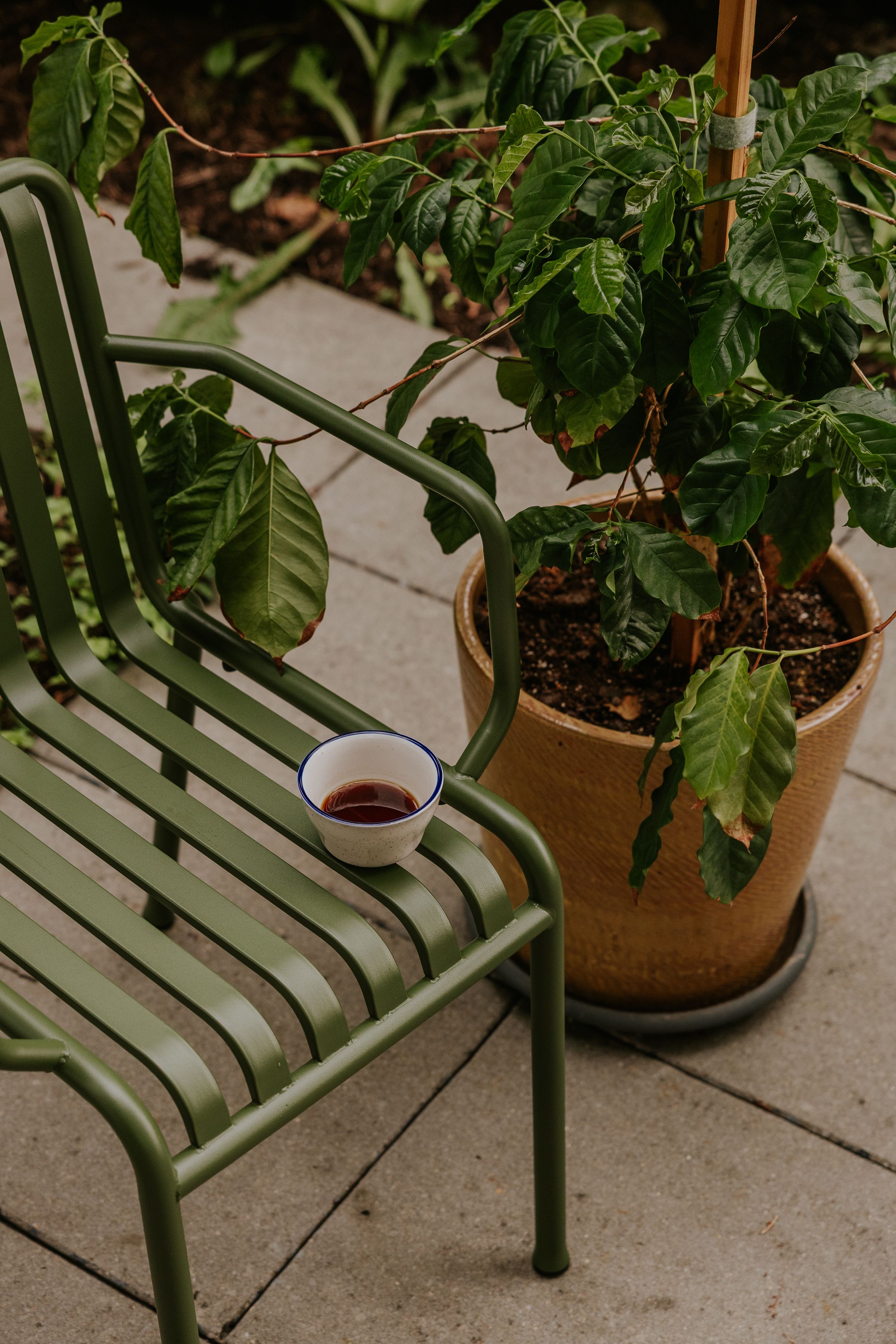
About seven years ago, Passenger’s Production Manager called me into their crowded office and pointed to a withering potted plant in the corner of their desk. It was a small seedling, only about six inches high. Its one remaining healthy leaf was outstretched towards a sliver of dappled sunlight that came through a skylight in the ceiling. “Do you want this thing?” he asked. And so a coffee plant was adopted that day.
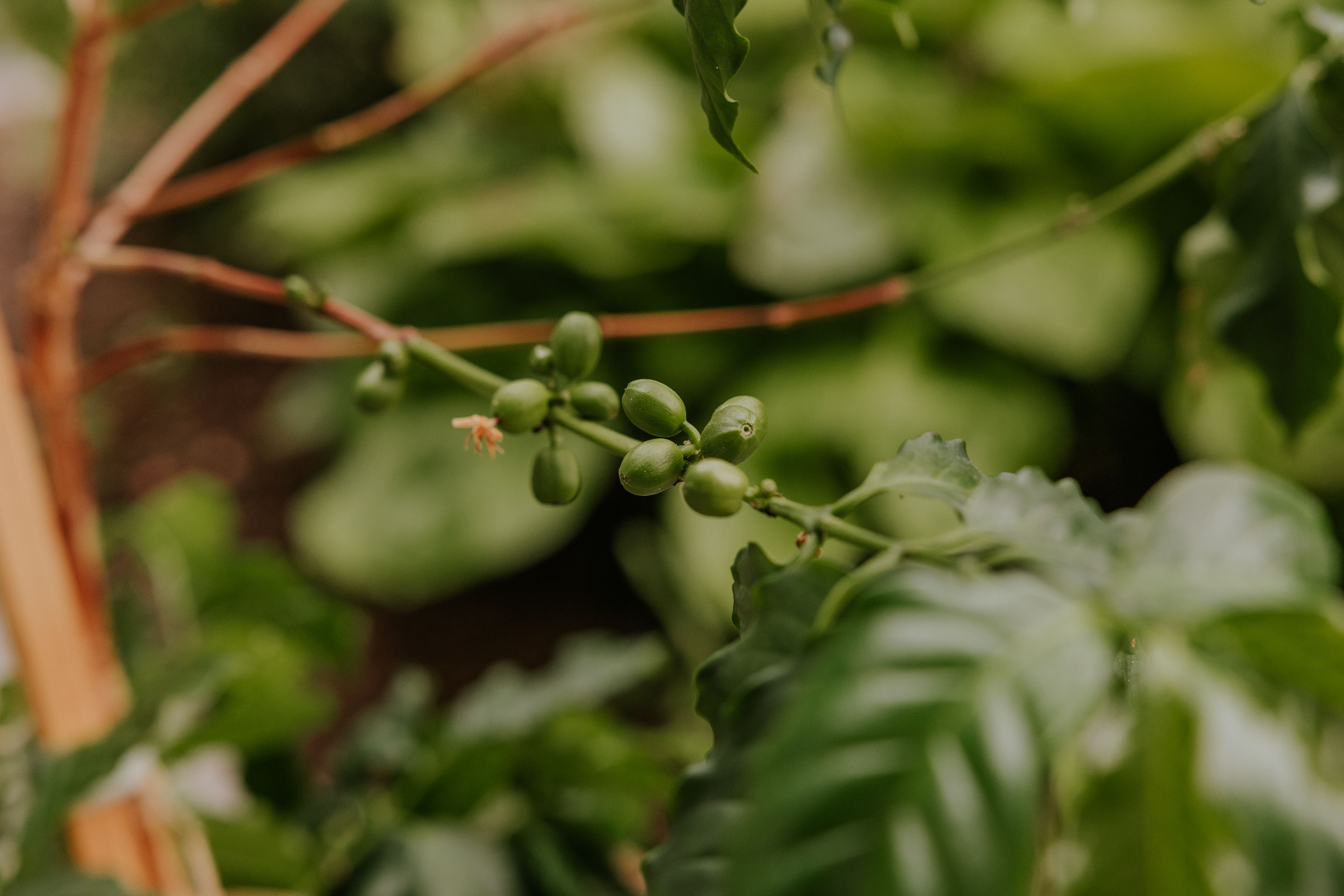
In the years since, the plant has been nursed back to health, repotted many times over, and for the first time this year, it began to bloom.1 It now sits in the main office at Passenger’s headquarters which, for a brief couple of weeks, was filled with the arresting jasmine-like fragrance of coffee blossoms. As we counted the budding green cherries in the weeks that followed, questions started being asked: Where did this plant come from? What variety is it? How is it doing so well? We’ve yet to answer all of these questions. There were theories of it having made its way back to Lancaster following a sourcing trip to El Salvador. Or maybe it was a long-forgotten gift from an old frequent customer of our Plum Street cafe.
In an effort to solve this mystery, I was reminded of a conversation I had with a colleague while attending Ljubljana Coffee Fest last fall. Earlier that year he had sent some plant material to be genetically tested in hopes of understanding more about a supposed ‘Inca Gesha’ variety from Peru.2 “It costs a few hundred bucks between the shipping and the testing. I think that’s worth it,” he noted. Having recently had discussions at Passenger about submitting some material from various producers we work with for testing, I decided this mystery plant might be worth testing as well. I will also admit that, having never submitted material for testing before, there seemed some logic to using this plant as a test subject for the process before submitting the more precious material from producers we work with. So, a few cuttings of new leaves later, and a carefully sealed padded mailer was sent on its way to RD2 Vision in France.
And then we waited.
After much back and forth with customs to get the package released, the day finally came, about a month later. The results were in. I could hardly believe it when the email appeared in my inbox. In the throes of countless other to-dos over those weeks of waiting, I had almost forgotten about it altogether. I greedily glossed over the body of the email and navigated straight to the attached PDF results, barely able to contain my excitement (it’s moments like these that remind me I still love working in coffee - that it will occasionally trick me into feeling like a younger version of myself).
The answer - an Anacafe14 hybrid variety
Given the abnormal size of the leaves of our mystery plant, we had long theorized that this plant was a Pacamara variety. It being confirmed as Anacafe perhaps explained not only why it looked like a Pacamara, but also how it was able to do so well despite years of occasional neglect and a comparatively arid mid-atlantic environment compared to the tropical climes it is best suited to. Anacafe 14 is a drought tolerant hybrid of Pacamara and Catimor.
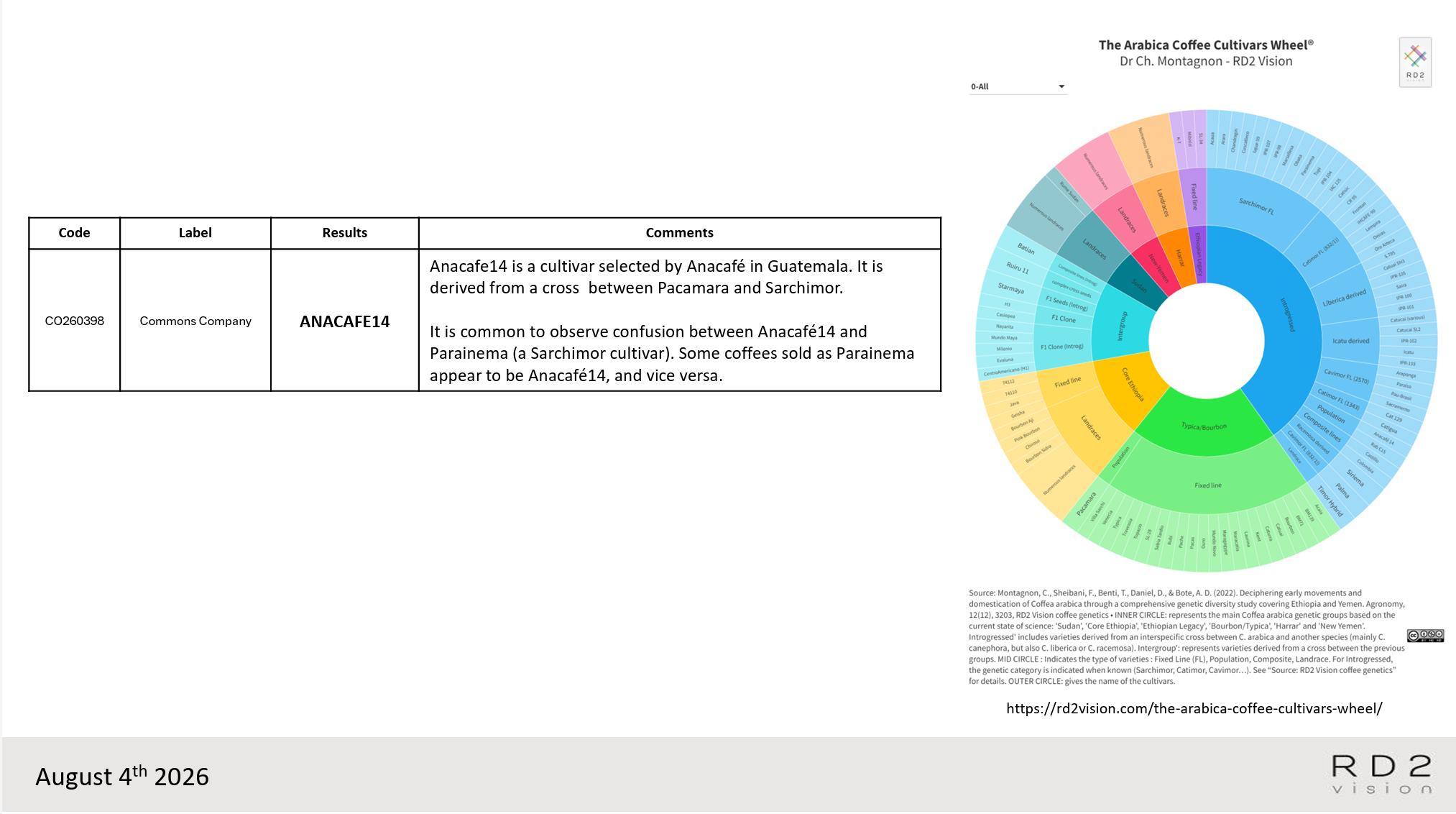
With the closing of one mystery however, another unfolded. If this had possibly come from a producer we work with, who believed this plant to be a Pacamara, how would we explain its identification as Anacafe14? The most obvious scenarios are ones that are unfortunately quite common. Maybe the tree was misidentified somewhere in the nursery or supply chain before being planted. Maybe the seed lot it came from was never fully verified as Pacamara, and genetic conformity had been lost somewhere along the way. This speaks to what World Coffee Research has referred to as coffee’s “missing middle” - the lack of a formal seed sector.
“When it’s time to plant a new tree, most farmers either produce new ones from seeds collected in their fields or from neighbors, or obtain them from small local nurseries. The quality of the materials from these sources is often low due to a lack of phytosanitary standards, traceability, and genetic conformity… At the same time, the consequences of having the wrong variety—for example one that is not resistant to a key disease in the farmers’ region—can be disastrous… When functional seed systems emerge, it allows the potential of coffee varieties to be unleashed. It “de-risks” the investment farmers make in planting new trees, improving farmer livelihoods and contributing to enhanced country competitiveness and origin diversity.”3
In a 2023 survey conducted by WCR that examined the genetic conformity of 53 seed lots from across Guatemala, Honduras, Nicaragua, El Salvador, and Peru, it was found that “Only 26% of seed lots had high rates of genetic conformity of 90% or higher.” Coincidentally, among three particular varieties to show higher levels of compliance was Aanacafe 14.4
Despite this reality, I was curious if there was yet another scenario for our plant: could it be that our tree represented an independent naturally occurring Pacamara × Catimor (or similar) hybrid whose SSR profile5 was ultimately indistinguishable from Anacafé 14 using a given marker set? After all, Anacafe14 is “supposed to have originated from a natural cross between a Catimor variety (Timor Hybrid 832/1 x Caturra) with Pacamara around 1980”.6 I brought this question to Dr. Christopher Mantagnon of RD2 Vision and the answer, in short, was no. Dr. Montagnon explained that the DNA fingerprint showed it was not a F1 or F2 (first or second generation cross) but “from a stabilizing genealogical selection that needs several human directed breeding operations.” In other words, the DNA analysis showed our plant was not simply the original offspring of two different plant parents (an F1) or the offspring resulting from crossing two F1 plants (an F2). Instead, it came from a breeding line that had undergone repeated human-directed selections over multiple generations to stabilize desirable traits.
In the end, we couldn’t discover where this plant came from, but we were able to quite positively identify its genetic makeup. Perhaps this one small clue will bring us closer to solving this mystery more completely. Nonetheless, the process of pursuing genetic testing has prompted many interesting conversations and questions around the cupping table: In a world where most specialty roasting companies, including Passenger, list a coffee’s variety on their retail bags and web PDPs, can we actually claim we know what we’re drinking? Is the rise of co-ferments just a cyclical revisiting of the glory days of flavored coffee? (Okay, that last one is unrelated).
- 1Much credit for this plant’s survival goes to Crystal Weaver, co-owner of Passenger, who has patiently tended to it over the years.
- 2See Chris Feran’s article: https://christopherferan.com/2026/01/02/the-lost-origins-of-inca-gesha/
- 3 ‘World Coffee Research: Why Do Seed Systems Matter?’ https://worldcoffeeresearch.org/programs/why-do-seed-systems-matter
- 4 World Coffee Research: Quality Assurance in the Coffee Seed Sector https://worldcoffeeresearch.org/resources/quality-assurance-report
- 5 SSR (Simple Sequence Repeat) markers are small, repeated sections of DNA. Scientists can compare the number of repeats at specific locations in the genome between two plants to draw inferences about their genetic similarity. If two coffee varieties have the same SSR pattern across many markers, they are said to have the same DNA fingerprint, suggesting they are very closely related or potentially the same genotype.
- 6 World Coffee Research Varieties Catalog, Anacafe 14: https://varieties.worldcoffeeresearch.org/varieties/anacafe-14